

As I rummaged through my fridge, I stumbled upon some leftover beef bulgogi just waiting to be transformed into something magical. That’s when the idea of Quick Korean Beef Bulgogi Stew with Glass Noodles struck me! This cozy stew is not just a delightful remedy for chilly evenings—it allows us to repurpose leftovers in a way that feels fresh and exciting. In just 15 minutes, you can create a hearty, flavorful dish with tender beef, chewy sweet potato noodles, and a rich savory broth that wraps you in warmth and comfort. Plus, this recipe is not just quick, but it brings a taste of Korean cuisine right into your home! How can something so simple and satisfying make you feel like a culinary expert? Let’s find out together!
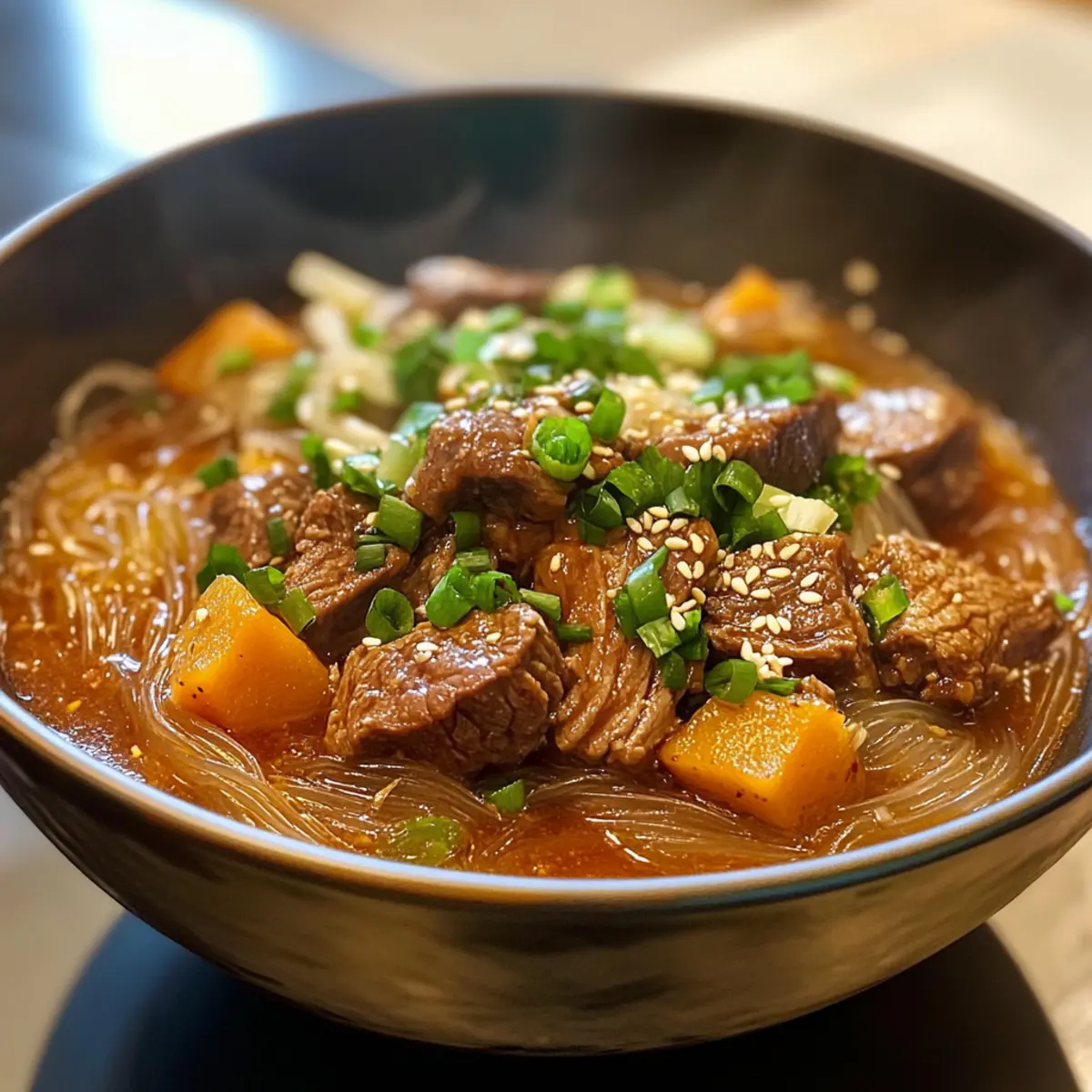
Why Is This Stew a Must-Try?
Quick Preparation: This recipe is ready in just 15 minutes, making it the perfect weeknight meal for busy schedules.
Repurpose Leftovers: Transform your leftover beef bulgogi, preventing waste while creating a new, exciting dish.
Comforting Flavors: Enjoy a savory broth enriched with soy sauce and sesame oil, offering a delightful taste of Korea from your kitchen.
Chewy Noodles: The sweet potato glass noodles add a satisfying texture, creating a delightful bite alongside the tender beef.
Crowd-Pleasing Dish: Serve it with rice and traditional Korean side dishes for an authentic feast that friends and family will love! If you’re looking for more delicious weeknight meals, check out Korean Gochujang Beef or Ground Beef Potato.
Korean Beef Bulgogi Stew Ingredients
Transform your leftovers into a warm delight!
For the Stew
- Korean Beef Bulgogi – Adds a sweet-savory flavor profile to the stew; if you don’t have leftovers, consider using freshly marinated beef.
- Sweet Potato Noodles (Dangmyeon) – Provide a chewy texture; soak in warm water before adding for the best results.
- Enoki Mushrooms – Contribute a delicate, crisp texture; substitute with shiitake or button mushrooms for a different flavor.
- Green Onion – Offers a fresh, oniony bite; use it generously as a garnish to elevate the dish.
- Water – Acts as the broth base; replace with beef broth for a richer flavor.
- Sesame Oil – Adds a nutty depth; it’s essential for capturing the authentic taste of Korean cuisine.
- Soy Sauce – Provides that umami kick; adjust to your taste preference for the perfect level of saltiness.
Feel free to sprinkle in some creativity or add additional vegetables to make this Korean Beef Bulgogi Stew entirely your own!
Step‑by‑Step Instructions for Korean Beef Bulgogi Stew
Step 1: Soak the Noodles
Begin by soaking the sweet potato glass noodles (dangmyeon) in warm water for about 10-15 minutes, until they soften and become pliable. This soaking process is essential for achieving the perfect chewy texture in your Korean Beef Bulgogi Stew. While the noodles soak, you can prepare the other ingredients to streamline the cooking process.
Step 2: Heat the Pot
In a medium pot, warm your leftover Korean beef bulgogi over medium heat for about 3-4 minutes. Stir occasionally to ensure even heating. As the beef warms, add soy sauce and sesame oil, mixing thoroughly. This will create a deliciously fragrant base, bringing those comforting flavors to the forefront as you transform the leftovers into a hearty stew.
Step 3: Create the Broth
Pour in 4 cups of water or beef broth, raising the heat to bring the mixture to a gentle boil—this should take about 5 minutes. Watch for bubbles beginning to rise; this indicates your flavorful broth is developing. Using broth instead of water can enhance the stew’s rich flavor, making it even more satisfying on cold days.
Step 4: Add Noodles and Mushrooms
Once boiling, drain the soaked glass noodles and add them to the pot, along with enoki mushrooms. Cook everything together for about 3-4 minutes, stirring gently to combine. The glass noodles should become tender and translucent, while the mushrooms will soften slightly, adding an incredible texture to your Korean Beef Bulgogi Stew.
Step 5: Garnish and Serve
After cooking, remove the pot from heat and ladle the delicious stew into bowls. Finely chop green onions and sprinkle them generously over the top for a burst of freshness. Serve your Korean Beef Bulgogi Stew hot, perhaps accompanied by steamed rice or traditional Korean side dishes for an authentic experience that your family will surely love!
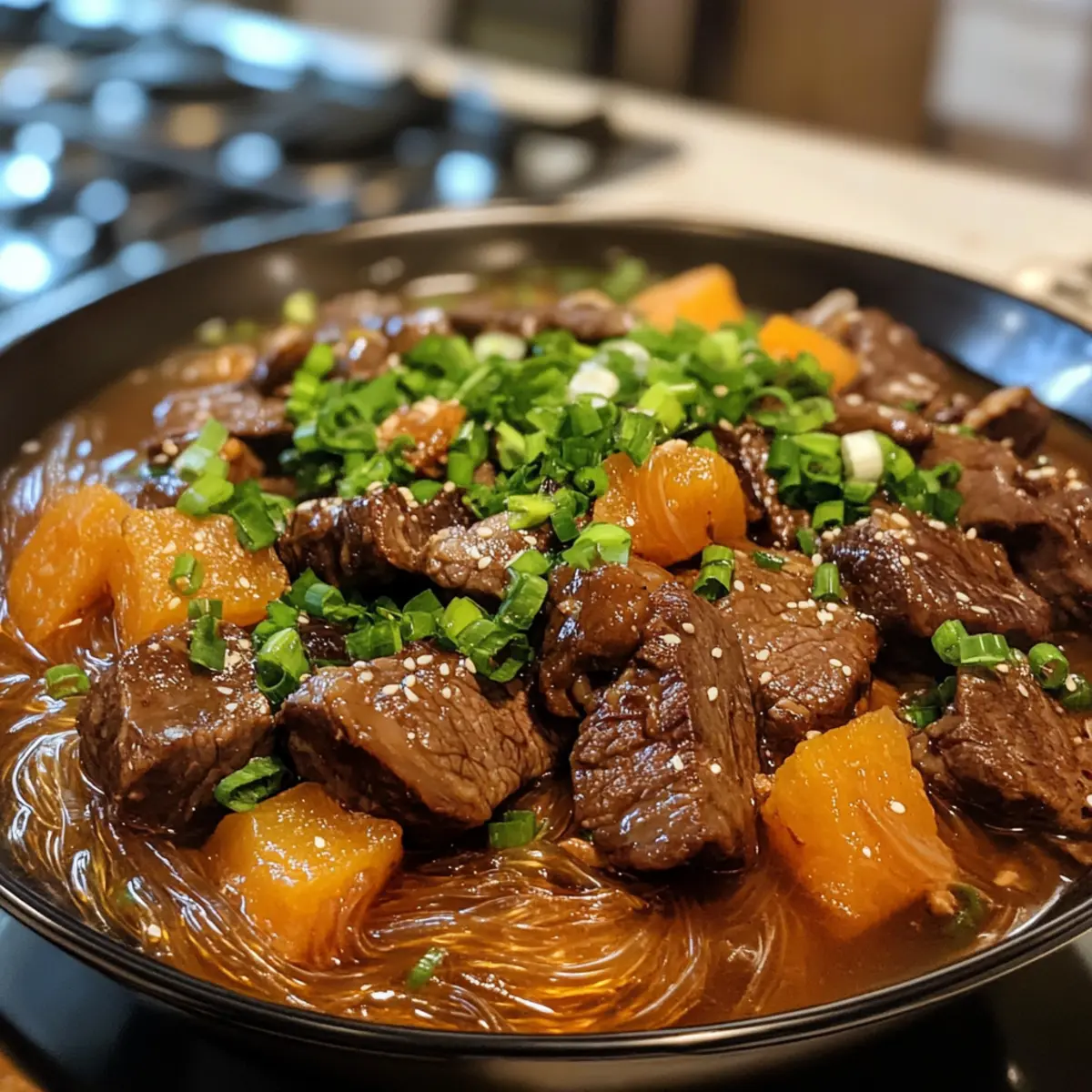
Expert Tips for Korean Beef Bulgogi Stew
-
Soaking Noodles: Ensure the sweet potato noodles are fully soaked in warm water before adding them to the stew for the perfect chewy texture.
-
Broth Base: For a richer flavor, always opt for beef broth instead of water. It elevates the taste of your Korean Beef Bulgogi Stew immensely!
-
Adjust Seasoning: Taste as you go! Depending on your soy sauce’s saltiness, feel free to adjust the amount to suit your palate for the best flavor.
-
Add Vegetables: Enhance nutrition and color by adding vegetables like bok choy or napa cabbage. They complement the primary ingredients beautifully.
-
Leftover Storage: Store any leftover stew in an airtight container. It’s best enjoyed within 2 days, but be sure to reheat gently for optimal taste.
Make Ahead Options
Preparing your Korean Beef Bulgogi Stew ahead of time is a fantastic way to save time during busy weeknights! You can easily make the base of the stew (the bulgogi and broth) up to 3 days in advance. Simply store the cooled mixture in an airtight container in the fridge. For the sweet potato noodles, soak them in warm water beforehand, but add them to the stew only when you’re ready to heat it—this ensures they retain their delightful texture. When it’s time to serve, heat the bulgogi stew on the stove and toss in the soaked noodles and mushrooms for about 3-4 minutes. By prepping ahead, you’ll enjoy a comforting meal with minimal effort, just as delicious as when freshly made!
Korean Beef Bulgogi Stew Variations
Feel free to get creative with your Korean Beef Bulgogi Stew and explore these exciting twists!
-
Mushroom Swap: Switch out enoki mushrooms for shiitake or button mushrooms to diversify the texture and flavor.
-
Veggie Boost: Add leafy greens like bok choy or napa cabbage for extra nutrients and vibrant colors that brighten up your bowl.
-
Spice It Up: Add a teaspoon of gochugaru (Korean red pepper flakes) for a gentle heat that enhances the stew’s overall flavor.
-
Zesty Citrus: Squeeze a little lemon or lime juice before serving to add a refreshing zing that balances the richness of the beef.
-
Noodle Variety: Swap sweet potato noodles for traditional wheat noodles or even zoodles (zucchini noodles) to play with different textures.
-
Creamy Touch: Stir in a splash of coconut milk for a creamy, slightly sweet twist that complements the savory elements beautifully.
-
Herb Infusion: Garnish with fresh cilantro or basil for an aromatic finish that brightens the dish and adds unique flavor.
-
Chili Kick: For those who enjoy heat, toss in some sliced jalapeños or a drizzle of chili oil to ignite your taste buds.
Once you try these variations, you might find yourself inventing your own delicious combos! And if you’re craving more Korean-inspired dishes, don’t forget to check out Korean Steak Sandwich and Chili Beef Flavor. Enjoy your cooking adventure!
How to Store and Freeze Korean Beef Bulgogi Stew
Fridge: Store leftover Korean Beef Bulgogi Stew in an airtight container for up to 2 days. Reheat gently on the stovetop, adding a splash of broth or water if needed.
Freezer: If you want to enjoy the stew later, freeze it in an airtight container for up to 3 months. Thaw overnight in the fridge before reheating.
Reheating: Reheat the stew on medium heat, stirring occasionally, until heated through. Add a bit of broth or water if the noodles have absorbed too much liquid.
Serving Freshness: For the best flavor and texture, enjoy your Korean Beef Bulgogi Stew freshly made. However, it’s still delicious when enjoyed as leftovers!
What to Serve with Quick Korean Beef Bulgogi Stew
Bring joy to your table with delightful side dishes that perfectly complement the warmth of this cozy stew.
-
Steamed Rice: A classic pairing that absorbs the savory broth beautifully, creating a satisfying and filling meal. It’s the go-to comfort side for a reason!
-
Kimchi: This tangy and spicy fermented side adds a layer of flavor, balancing the dish’s richness with its crunch and zest. Plus, it’s a staple in Korean cuisine.
-
Pickled Radishes: The crispness and slight sweetness of pickled radishes bring a refreshing contrast, cleansing your palate while enhancing each bite of the beef stew.
-
Korean Pancakes (Pajeon): These savory pancakes packed with green onions offer a delightful, crispy texture that pairs delightfully with the tender stew. Dip them in soy sauce for an extra flavor boost.
-
Sesame Spinach Salad: Fresh, lightly dressed spinach adds a fresh and nutty note, providing a vibrant green counterpoint to the hearty stew.
-
Hot Tea: A warm cup of jasmine or green tea cleanses the palate and elevates the meal experience, wrapping you in warmth alongside your cozy Korean Beef Bulgogi Stew.
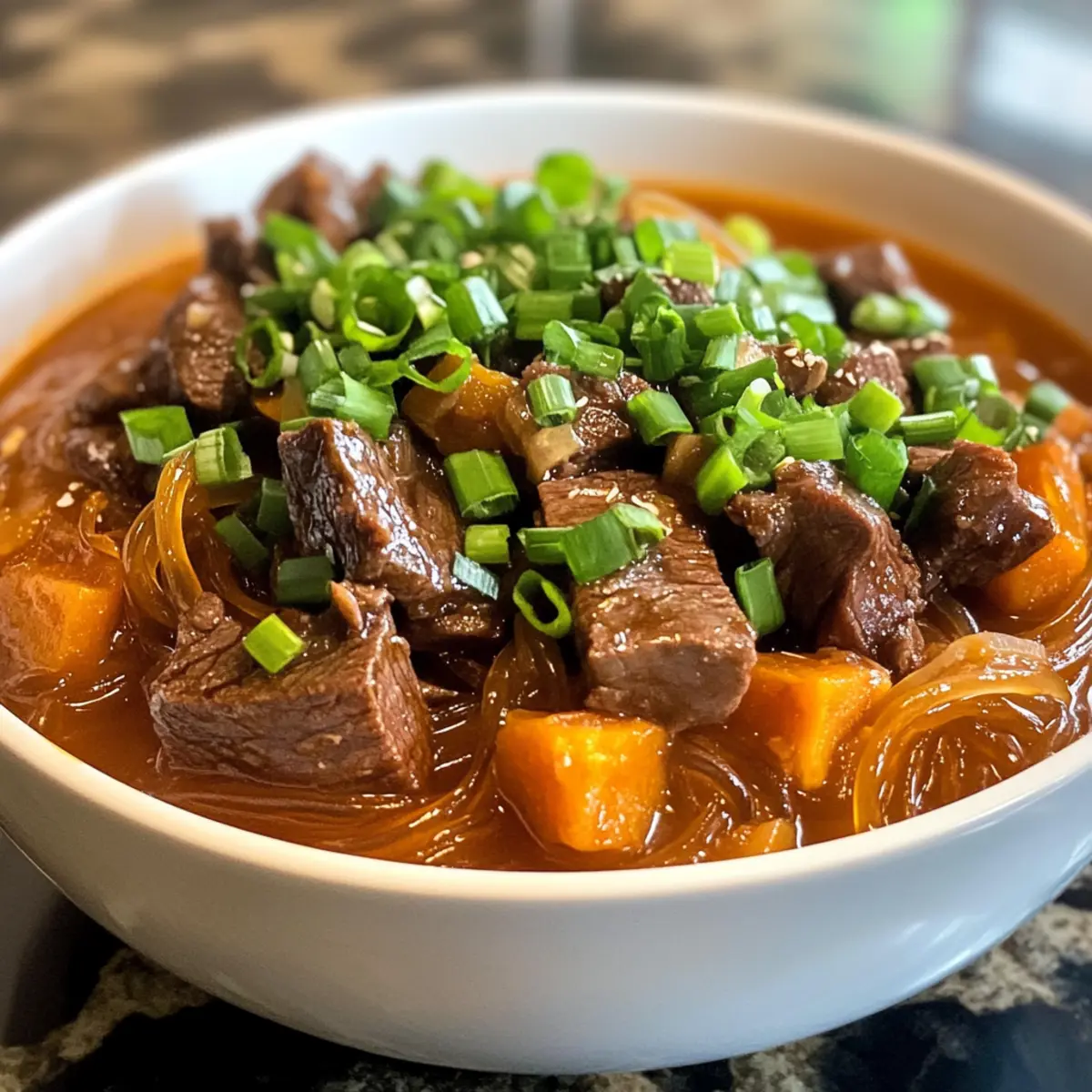
Korean Beef Bulgogi Stew Recipe FAQs
What should I look for when selecting beef for bulgogi?
Absolutely! When choosing beef for bulgogi, aim for cuts like ribeye or sirloin that are well-marbled. You want a tender, juicy texture, so look for bright, cherry-red color without dark spots. If you’re using leftovers, ensure they’re stored properly and still display a fresh aroma.
How long can I store my Korean Beef Bulgogi Stew in the fridge?
You can store this hearty stew in an airtight container for up to 2 days in the fridge. If you’re planning to enjoy it later, consider reheating it gently on the stovetop to prevent the noodles from becoming mushy—just add a splash of water or broth to revive its glorious texture.
Can I freeze the Korean Beef Bulgogi Stew?
Yes! To freeze your stew, let it cool completely, then transfer it to an airtight container, leaving some space for expansion. It will keep well in the freezer for up to 3 months. When you’re ready to enjoy it, thaw it overnight in the fridge and reheat on medium heat until it’s piping hot. Just remember to add a little broth or water if the noodles have absorbed too much liquid.
What if my sweet potato noodles are too mushy after cooking?
Very! If you find your sweet potato noodles too mushy, it might be due to over-soaking. In the future, soak them for just 10-15 minutes until pliable, then promptly add them to your steaming broth. This helps maintain a delightful chewiness that enhances the heartiness of your stew.
Are there any dietary restrictions I should be aware of with this stew?
Of course! If you’re cooking for anyone with soy allergies, consider using coconut aminos or a gluten-free soy sauce alternative. Additionally, keep an eye on the portion sizes of the sweet potato noodles if you’re following a low-carb diet. As always, feel free to substitute any ingredients as required to suit dietary needs, ensuring everyone can enjoy this cozy Korean Beef Bulgogi Stew!
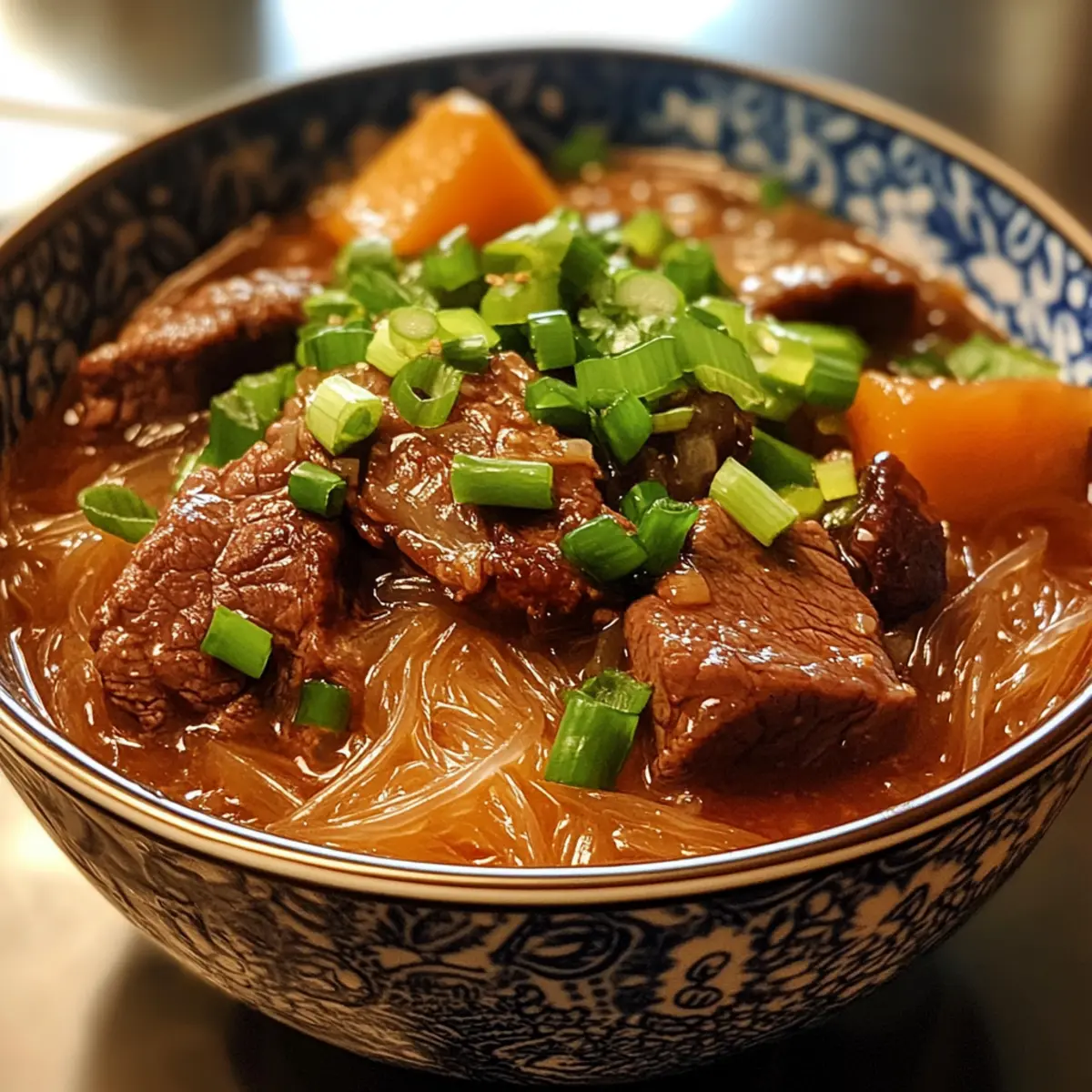
Cozy Korean Beef Bulgogi Stew: A Hearty Comfort Dish
Ingredients
Equipment
Method
- Begin by soaking the sweet potato glass noodles (dangmyeon) in warm water for about 10-15 minutes, until they soften.
- In a medium pot, warm your leftover Korean beef bulgogi over medium heat for about 3-4 minutes, then add soy sauce and sesame oil.
- Pour in 4 cups of water or beef broth, raise heat to bring to a gentle boil—this should take about 5 minutes.
- Once boiling, drain the soaked glass noodles and add them along with enoki mushrooms. Cook for 3-4 minutes.
- Remove from heat and ladle the stew into bowls. Garnish with finely chopped green onions and serve hot.