

In the cozy corners of my kitchen, there’s nothing quite like the aroma of caramelized onions simmering away, tempting me to come closer. This Japanese Onion Soup Recipe is my go-to for comfort on a chilly evening or when I need a quick, nourishing meal. With minimal effort, you can whisk together a delightful broth that beautifully marries the sweetness of onions with the rich umami of miso and mushrooms. Not only does this soup warm your soul, but it’s also a fantastic way to embrace a lighter, healthier dining option, especially when you swap chicken stock for vegetable stock for a vegan twist. If you’re ready to savor a bowl of pure satisfaction, why not let the warmth of this soup envelop you?
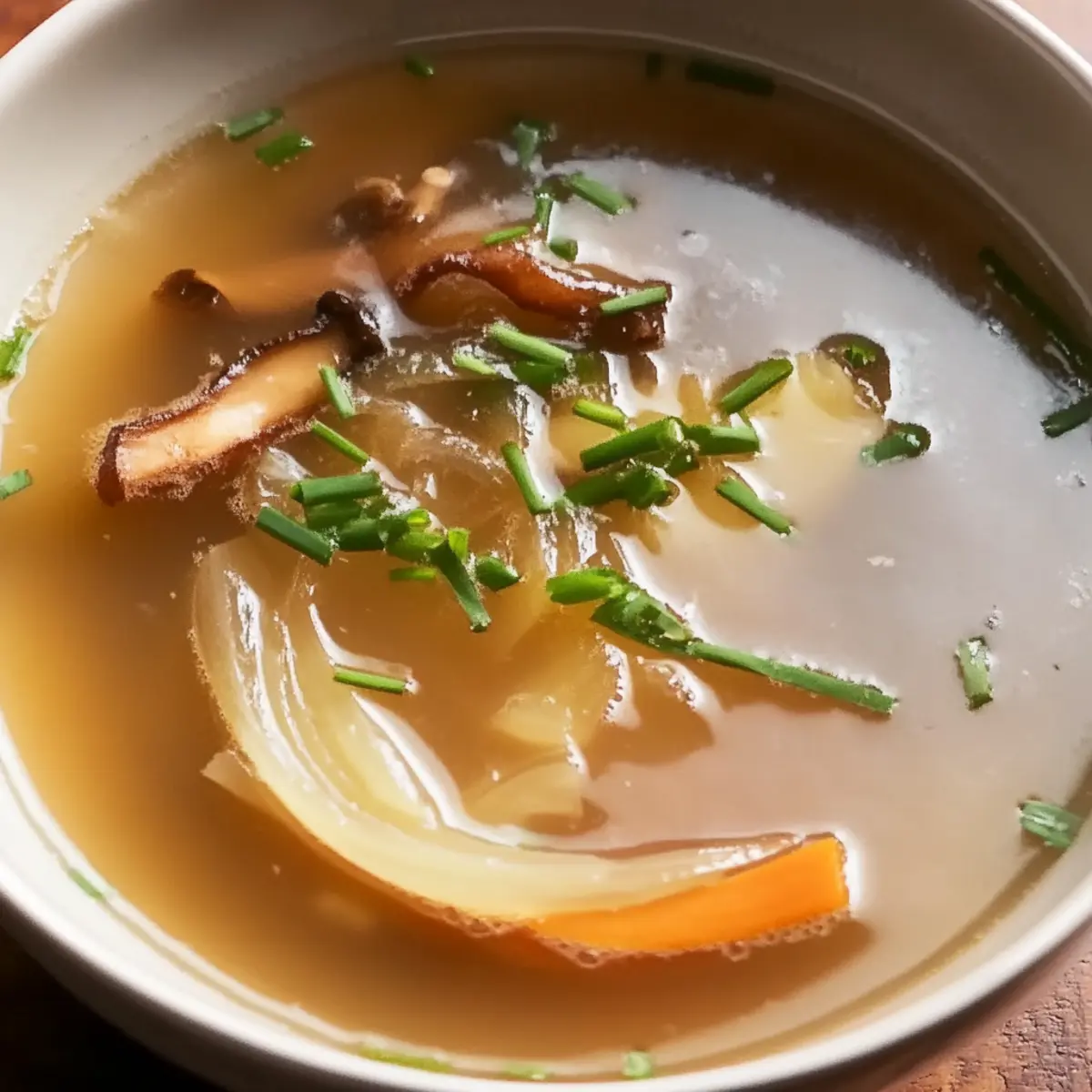
Why is Japanese Onion Soup so special?
Comforting and aromatic, this soup will wrap you in warmth, making it a culinary hug on a chilly evening. Simplicity shines through, requiring just a handful of ingredients, ideal for busy weeknights. Versatile for dietary needs, enjoy a vegan version by swapping chicken stock for vegetable stock. Each bowl is not only delicious but also nutrient-packed, brimming with vitamins and antioxidants. Pair it with a light salad or a comforting bowl of rice for a complete meal, or try it as an appetizer like in our Coconut Curry Soup for a fusion twist!
Japanese Onion Soup Ingredients
Discover the comforting essentials!
For the Soup Base
- Carrot – Adds natural sweetness and depth; substitute with parsnip for a different flavor.
- Onion – Provides the essential sweet flavor component; yellow or white varieties work best.
- Fresh Ginger Root – Adds warmth and a hint of spice; can use powdered ginger (1/4 tsp) as a substitute.
- Fresh Garlic – Enhances the overall flavor; mince it for even distribution.
- Celery – Provides a subtle aroma and crunch; can be omitted for a simpler flavor profile.
For the Mushrooms
- Baby Portobello Mushrooms – Contributes earthiness; sliced for best texture.
- Fresh Shiitake Mushrooms – Adds unique umami flavor; feel free to substitute with oyster mushrooms.
For the Broth
- Beef Bouillon Granules – Provides a rich base for the soup; switch to vegetable bouillon for a vegetarian option.
- Chicken Stock – Forms the primary liquid base; can be replaced with vegetable stock for a vegan Japanese onion soup recipe.
- Water – Completes the broth consistency and volume; use as needed.
For Garnish
- Fresh Chives – Offers a mild onion flavor and makes for a lovely garnish; green onions can be a suitable replacement.
Step‑by‑Step Instructions for Japanese Onion Soup Recipe
Step 1: Sauté the Base
Heat a large pot over medium heat and add chopped onions, carrots, and celery. Sauté the vegetables for about 8-10 minutes, stirring occasionally, until the onions become soft and translucent. The sweet aroma will begin to fill your kitchen, setting the stage for your comforting Japanese Onion Soup.
Step 2: Add Aromatics
Once your vegetables are softened, add the minced garlic and freshly grated ginger to the pot. Cook for an additional minute, stirring constantly to release their flavors. You’ll know it’s ready when the garlic is fragrant, creating a lovely aromatic foundation for the soup.
Step 3: Incorporate Mushrooms
Introduce the sliced baby portobello and shiitake mushrooms to the pot, stirring them in gently. Sauté for another 5-7 minutes until the mushrooms release their liquid and become tender. Their earthy goodness will blend beautifully with the sweet onion and carrot base, enhancing the depth of flavors in your Japanese Onion Soup.
Step 4: Build the Broth
Pour in water along with the chicken stock and beef bouillon granules, stirring well to combine. Increase the heat and bring the mixture to a boil. As the soup reaches a gentle boil, the smells will intensify, signaling the next step in crafting your rich broth for the Japanese Onion Soup.
Step 5: Simmer to Perfection
Reduce the heat to low and let the soup simmer for 15-20 minutes, allowing all the flavors to meld together. Keep an eye on the consistency, as you want a light broth that is full of flavor. Stir occasionally and taste if any additional seasoning is needed.
Step 6: Final Seasoning and Serve
Once simmering is complete, add a splash of soy sauce for an extra umami kick. Stir gently and serve hot, garnished with freshly chopped chives for a touch of color and a mild onion flavor. Each bowl of your Japanese Onion Soup is now ready to warm your soul!

Japanese Onion Soup Recipe Variations
Feel free to get creative with this comforting soup, making it your own with these delightful twists!
-
Vegan Upgrade: Swap chicken stock for vegetable stock to create a delicious, meat-free version that’s rich in flavor.
-
Mushroom Medley: Combine different mushroom varieties like oyster or enoki to add unique textures and flavors. Each bite becomes an adventure!
-
Tofu Addition: Stir in cubes of firm tofu for a protein boost and heartiness. It absorbs the flavors beautifully and elevates the dish.
-
Spicy Kick: Add a sprinkle of red pepper flakes or a drizzle of chili oil to give your soup a warm, spicy undertone. You’ll love the contrast of heat with the sweet onions.
-
Herb Infusion: Toss in fresh herbs like cilantro or parsley right before serving for a burst of freshness. It adds a vibrant color and lifts the flavor profile to new heights.
-
Coconut Cream: For a rich twist, stir in some coconut cream for a creamy texture and a hint of tropical sweetness, echoing the comforting warmth of its Japanese roots.
-
Sautéed Greens: Mix in sautéed spinach or bok choy just before serving for added nutrition and a lovely pop of color, reminding you of the freshness found in a delightful garden.
-
Garnish Upgrades: Instead of chives, sprinkle with toasted sesame seeds or crushed seaweed for an extra crunch and authentic Japanese flair. Each garnish adds a new taste dimension.
These variations not only personalize your bowl of Japanese Onion Soup but can elevate your dining experience to perfection! If you’re looking for more delightful soup options, check out Coconut Curry Soup or Old Fashioned Vegetable Beef Soup for inspiration. Happy cooking!
How to Store and Freeze Japanese Onion Soup
Fridge: Store leftover Japanese Onion Soup in an airtight container for up to 3 days. Ensure it cools completely before sealing to maintain freshness.
Freezer: For longer storage, freeze soup in portion-sized airtight containers or freezer bags for up to 3 months. Label with the date for easy identification.
Reheating: When ready to enjoy, thaw overnight in the refrigerator, then reheat gently on the stove over low heat, stirring occasionally to restore its delicious flavor.
Airtight Tips: To prevent freezer burn, make sure to remove as much air as possible from containers or bags. Enjoy a warm, comforting bowl anytime!
Make Ahead Options
These comforting Japanese Onion Soup components are perfect for meal prep, making busy evenings a breeze! You can chop the vegetables and store them in an airtight container in the refrigerator for up to 3 days; keep the mushrooms separate to avoid moisture. The soup base can also be made ahead and refrigerated for up to 24 hours. When you’re ready to serve, simply reheat the broth on the stove, add the fresh ingredients like chives, and enjoy a bowl that’s just as delicious as if it were freshly made! This way, you save time and ensure your meal is packed with flavor without the last-minute rush.
What to Serve with Japanese Onion Soup
Dive into a delightful selection of pairings that will elevate your dining experience beyond just a bowl of soup.
-
Steamed Jasmine Rice: The fragrant grains soak up the flavorful broth beautifully, making each bite even more satisfying. Serve it alongside for a complete meal that’s both comforting and filling.
-
Simple Green Salad: A fresh, crisp salad adds a wonderful contrast to the warm soup, providing texture and a burst of color. Use a light vinaigrette to keep the focus on the soup’s rich flavors.
-
Toasted Baguette Slices: These crunchy baguette slices are perfect for dipping! Slather them with a touch of olive oil or butter for added richness that complements the umami notes of the soup.
-
Savory Tempura Vegetables: Light and crispy tempura bring a delightful crunch that pairs well with the warm soup. Feel free to choose a mix of seasonal vegetables for a colorful addition.
-
Herbal Tea: A cup of chamomile or ginger tea can enhance the soothing experience of the soup while providing added warmth. This combination creates a perfect cozy meal setting.
-
Coconut Mochi Ice Cream: Finish your meal with a sweet touch by serving coconut mochi ice cream. Its chewy texture and tropical flavor offer a fun contrast to the savory soup.
Elevate your dining feast and nourish your well-being with these thoughtful pairings!
Expert Tips for Japanese Onion Soup
• Caramelize for Depth: Sauté onions until they reach a light caramelization to enhance the overall flavor of your Japanese Onion Soup.
• Season with Care: Adjust the bouillon granules and soy sauce to control saltiness, as too much can overwhelm the delicate flavors.
• Mushroom Swap: Experiment with different mushroom varieties for unique tastes; portobello and shiitake lend their umami essence beautifully.
• Simmer Longer for Flavor: Allow the soup to simmer longer if desired; this melds the flavors and adds depth to your comforting broth.
• Vegan Variation: For a meat-free option, use vegetable bouillon and stock to create a delicious vegan version of Japanese Onion Soup.
Japanese Onion Soup Recipe FAQs
How do I choose the right onions for my Japanese Onion Soup?
Absolutely! For the best flavor, I recommend using yellow or white onions. Look for onions that are firm and have a papery skin, free from dark spots or blemishes. Sweeter varieties will caramelize beautifully, enhancing the richness of your soup.
How long can I store leftover Japanese Onion Soup in the fridge?
You can store leftover soup in an airtight container for up to 3 days. Be sure to let it cool completely before sealing to maintain its fresh flavor. When you’re ready to eat, gently reheat it on the stove to bring back its warmth and depth.
Can I freeze my Japanese Onion Soup?
Very much so! To freeze, pour your cooled soup into portion-sized airtight containers or freezer bags—ideally, leaving about an inch of space at the top for expansion. It will keep well for up to 3 months. Just label them with the date, and when you’re ready to enjoy some, thaw the soup in the refrigerator overnight and reheat gently on the stove.
What if my soup tastes too salty?
If you find your soup is a tad salty, don’t worry! You can balance the flavors by adding more water or a splash of unsalted vegetable broth to dilute it. If it’s too late for that, try adding a small diced potato while simmering; it’ll absorb some saltiness. Just remember to remove the potato before serving!
Is this soup safe for my pet?
While the Japanese Onion Soup is delicious for humans, it’s crucial to know that onions are toxic to dogs and cats. If you’re sharing your meal with furry friends, it’s best to keep them away from this dish and opt for pet-safe snacks instead.
Are there any allergy considerations for this recipe?
Of course! This soup is generally well-tolerated, but be cautious if you have allergies to mushrooms or soy products, as they are key ingredients. You can easily omit mushrooms or use soy sauce alternatives to adjust for any sensitivities. Always check labels for hidden allergens if using store-bought products.
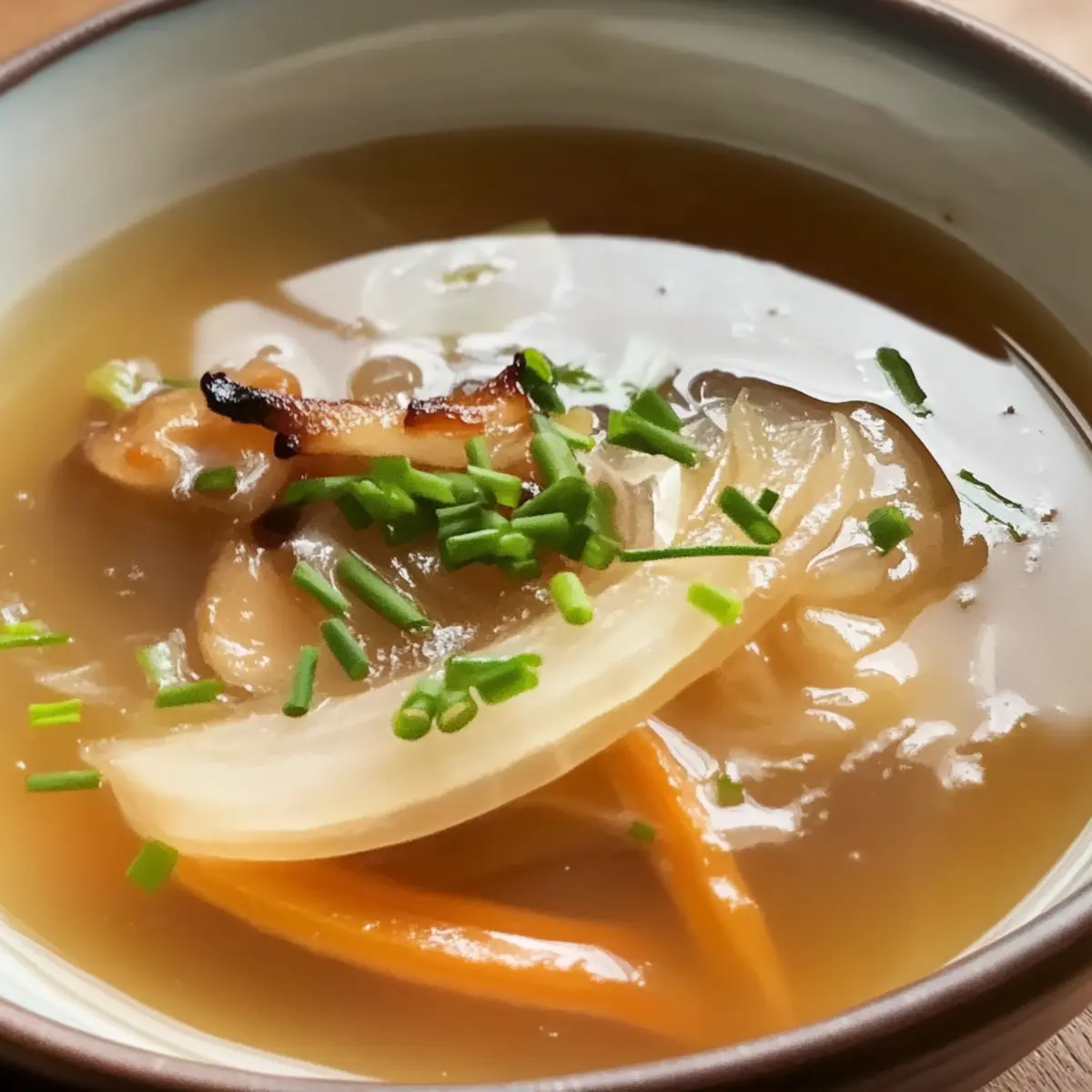
Comforting Japanese Onion Soup Recipe for Soulful Evenings
Ingredients
Equipment
Method
- Heat a large pot over medium heat and add chopped onions, carrots, and celery. Sauté the vegetables for about 8-10 minutes until the onions become soft and translucent.
- Once softened, add minced garlic and grated ginger to the pot. Cook for an additional minute, stirring constantly.
- Introduce sliced mushrooms to the pot, stirring gently. Sauté for another 5-7 minutes until the mushrooms release their liquid and become tender.
- Pour in water, chicken stock, and bouillon granules, stirring well to combine. Increase the heat to bring it to a boil.
- Reduce heat and let the soup simmer for 15-20 minutes. Stir occasionally and adjust seasoning if needed.
- Add a splash of soy sauce for extra umami, stir gently, and serve hot garnished with freshly chopped chives.