

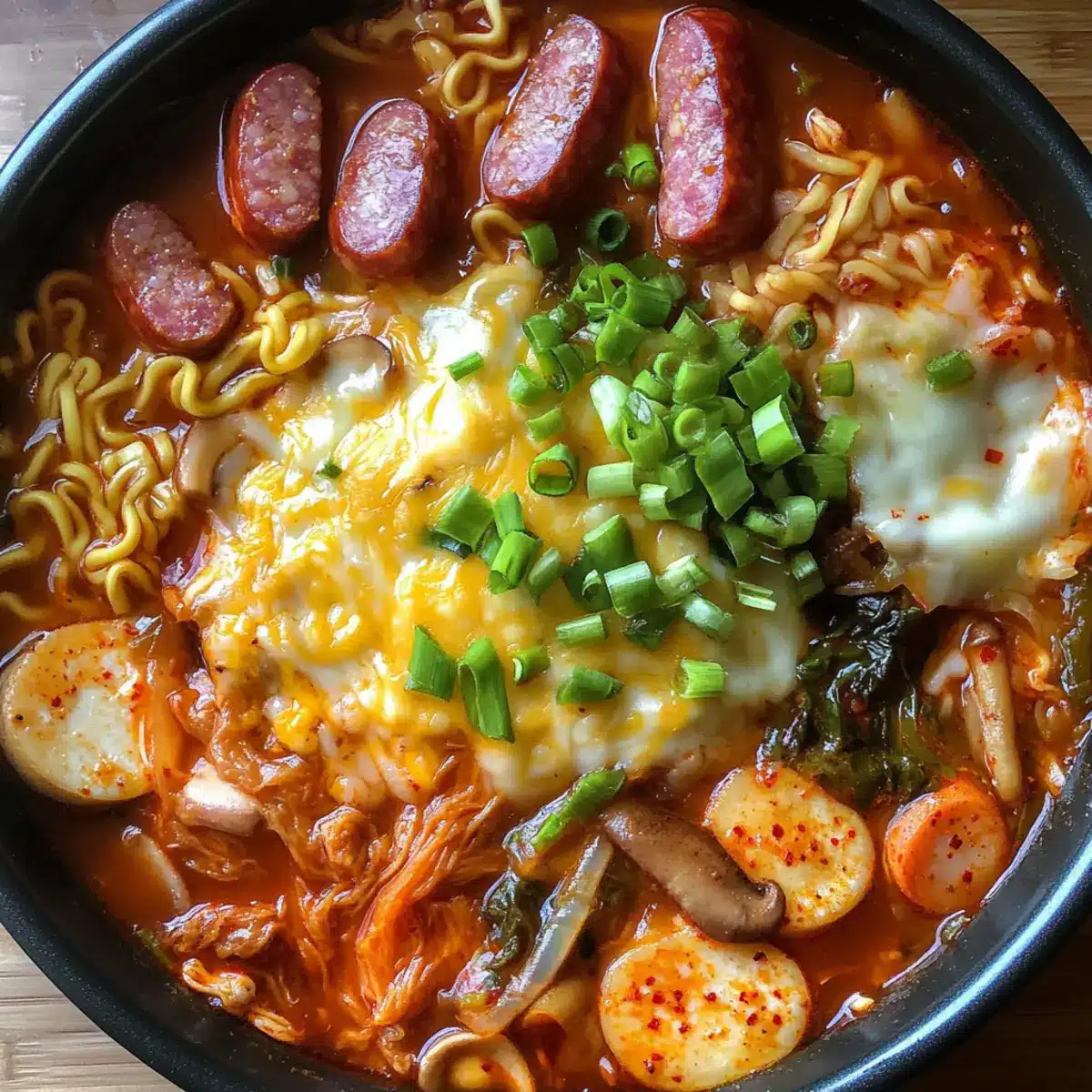
Standing in my kitchen, I can still hear the sizzle of ingredients meeting the pot, mingling into a comforting aroma that wraps around you like a warm blanket. Today, I’m thrilled to share my take on Budae Jjigae, also known as One-Pot Korean Army Stew, a dish that’s perfect for cozy nights at home. This savory stew is not only packed with bold flavors from kimchi, spam, and sausage, but it also comes together effortlessly in just one pot—ideal for easy cleanup after a hearty meal. Best of all, it’s fully customizable, allowing you to adapt it to your taste, whether you prefer more spice, extra veggies, or a vegetarian twist. Ready to discover how this delightful dish became a cherished favorite on chilly evenings? Let’s dive in!

Why is Budae Jjigae a Must-Try?
Comforting and Hearty: The blend of spam, sausage, and kimchi helps create a satisfying stew that’s perfect for chilly nights.
One-Pot Wonder: With minimal cleanup, you can enjoy a delicious meal without the hassle of multiple dishes.
Versatile and Customizable: Whether you crave more heat or want to load it up with seasonal vegetables, this recipe adapts to your cravings effortlessly.
Cultural Fusion: With elements rooted in both Korean and American cuisine, Budae Jjigae tells a story of resourcefulness and rich history.
Quick to Prepare: Perfect for busy weeknights, this dish comes together in a flash, allowing you to focus on savoring every bite.
For more flavorsome fusion dishes, don’t miss out on my recipes like Spicy Korean Gochujang Beef Noodles or a delightful Korean Steak Sandwich for your next meal!
One-Pot Korean Army Stew Ingredients
For the Sauce
• Minced Garlic – Adds depth and aromatic flavor; fresh is preferred, but garlic powder can substitute.
• Gochugaru (Korean Red Pepper Flakes) – Provides spice and color; adjust quantity for your desired heat level.
• Gochujang (Korean Chili Paste) – Adds umami and sweetness; sambal oelek can be used for a different flavor profile.
• Soy Sauce – Enhances savory notes; tamari can be used for a gluten-free option.
• Mirin – Offers mild sweetness and acidity; substitute with sugar and water if unavailable.
• Sugar – Sweetens the dish; brown sugar can be used for a deeper flavor.
• Black Pepper – Adds mild spiciness and balances flavors.
For the Stew
• Spam – A key protein component providing saltiness and texture; can substitute with tofu for a vegetarian option.
• Sausage – Adds heartiness; any cooked sausage (Italian, kielbasa, etc.) works well.
• Tofu – Acts as a protein source; firm tofu is ideal.
• Rice Cakes – Adds chewy texture; can be omitted for fewer carbs.
• Onion – Enhances sweetness; yellow or white onions work great.
• Enoki Mushrooms – Contributes umami and visual appeal; any mushrooms can be used.
• Kimchi – Provides tanginess and complexity; use store-bought or homemade for the best results.
• Chicken Broth – The base liquid for the stew; vegetable broth can be used for a vegetarian version.
• Ramen Noodles – Creates a filling element; any instant noodles can substitute.
• Cheese – Optional for a creamy texture on top; mozzarella or cheddar works well.
• Green Onions – For garnish, adding fresh flavor and colorful presentation.
With these One-Pot Korean Army Stew ingredients, you’re just steps away from creating a cozy and satisfying meal. Enjoy the journey of flavors!
Step‑by‑Step Instructions for One-Pot Korean Army Stew
Step 1: Prepare the Sauce
In a mixing bowl, combine 2 tablespoons minced garlic, 1 tablespoon gochugaru, 2 tablespoons gochujang, 3 tablespoons soy sauce, 1 tablespoon mirin, 1 teaspoon sugar, and a pinch of black pepper. Stir well until all the ingredients form a smooth paste. Set this flavorful sauce aside, as it will enhance the savory depth of your One-Pot Korean Army Stew.
Step 2: Load the Pot
In a large shallow pot or Dutch oven, layer your ingredients for optimal cooking. Start with 1 can of cubed spam, followed by sliced sausages (about 2-3), 1 cup of cubed firm tofu, and 1 cup of rice cakes. Then, add 1 sliced onion, 100 grams of enoki mushrooms, and 1 cup of chopped kimchi. This colorful arrangement ensures even cooking and a stunning presentation when serving.
Step 3: Add Liquid
Pour your prepared sauce mixture over the layered ingredients in the pot. Next, add 4 cups of chicken broth or vegetable broth carefully to cover the ingredients. Turn the heat to medium-high and bring the mixture to a gentle boil. Keep an eye on it, and stir occasionally, letting the flavors meld together beautifully for about 5 minutes.
Step 4: Incorporate Noodles
Once the stew reaches a rolling boil, uncover the pot and gently add 1 pack of instant ramen noodles and, if desired, ½ cup of shredded cheese for creaminess. Cover the pot again and let it simmer for an additional 3-4 minutes, or until the noodles are tender but still have a slight bite. Enjoy the delightful aromas filling your kitchen as your One-Pot Korean Army Stew comes to life!
Step 5: Garnish & Serve
After cooking, carefully remove the pot from heat. Sprinkle sliced green onions on top for a fresh burst of color and flavor. Serve the One-Pot Korean Army Stew hot on its own or alongside steamed rice for a hearty meal. Relish in the comforting warmth and rich flavors that make this dish a beloved favorite on chilly nights.

One-Pot Korean Army Stew Variations
Feel free to get creative with your Budae Jjigae to make it your own, enhancing flavors, textures, and dietary preferences!
-
Vegetarian Option: Substitute spam and sausage with firm tofu and additional seasonal vegetables, creating a hearty and plant-based delight.
-
Spicy Kick: Increase the gochugaru and gochujang for an extra fiery version if you love the heat. A spoonful of sriracha can also amp up the spice!
-
Ramen Alternatives: Try using udon or soba noodles instead of ramen for a different texture. They cook beautifully and soak up the flavorful broth.
-
Umami Boost: Add a splash of fish sauce or a sprinkle of dried seaweed flakes for an explosion of umami flavor that complements all the ingredients.
-
Cheesy Goodness: For a richer taste, mix in a handful of shredded mozzarella or cheddar cheese into the pot before serving. It melds beautifully for a creamy finish.
-
Extra Veggies: Toss in some chopped bok choy, zucchini, or carrots for more nutrients and a pop of color, making your stew even heartier.
-
Sweetness Shift: Swap regular sugar with brown sugar or honey for a subtle caramel note that beautifully balances the spiciness.
If you’re looking for more inspiring flavors, check out my Spicy Korean Gochujang Beef Noodles or a delicious Korean Steak Sandwich that are sure to please!
Make Ahead Options
Budae Jjigae is a fantastic recipe for busy home cooks wanting to save time during hectic weeknights! You can prepare all the ingredients up to 24 hours in advance, ensuring they’re ready to go when you need them. To do this, mix your sauce and store it separately in the refrigerator. Chop up the spam, sausage, tofu, onion, and mushrooms, then layer them in your pot with kimchi and rice cakes, covering tightly to retain freshness. When you’re ready to cook, simply pour the sauce and broth over the prepped ingredients, bring to a boil, and add the ramen noodles. This way, you’ll enjoy the same delicious flavors with minimal effort!
What to Serve with Budae Jjigae
Enhance your feast with complementary dishes that elevate the delightful flavors of this Korean Army Stew.
-
Steamed Rice: A perfect canvas for the hearty stew, it soaks up the rich, savory broth, making every bite comforting.
-
Pickled Vegetables: The tangy crunch balances the stew’s spiciness and adds a refreshing element, brightening every mouthful.
-
Korean Fried Chicken: The crispy texture and savory flavors create a delightful contrast to the stew’s warmth, making for a festive spread.
-
Kimchi Pancakes: These savory pancakes echo the kimchi’s flavors in the stew while providing a crispy texture that pairs beautifully.
-
Miso Soup: A mild and umami-packed broth, this delicate soup complements the bold flavors of Budae Jjigae, creating a harmonious meal.
-
Chilled Soju: Light and refreshing, this Korean spirit is a great choice to cleanse the palate between bites, enhancing the dining experience.
Enjoy mixing and matching these delightful pairings for a memorable feast around your table!
Expert Tips for One-Pot Korean Army Stew
- Kimchi Quality: Use well-fermented kimchi for a vibrant flavor; store-bought options should be fresh, enhancing the overall taste of your stew.
- Spice Adjustment: If you’re sensitive to heat, start with less gochugaru and gochujang, and gradually increase until you find your perfect spice level for the One-Pot Korean Army Stew.
- Noodle Watch: To avoid mushy ramen, add them only when the stew is fully boiling, ensuring a perfect chewy texture that complements the hearty ingredients.
- Texture Variety: Add seasonal vegetables like zucchini or bok choy for extra nutrition and delightful texture. These ingredients not only enhance flavor but also make your stew more colorful!
- Leftover Magic: Any leftover stew can be refrigerated for up to three days; add water or broth when reheating to maintain the ideal consistency of your One-Pot Korean Army Stew.
How to Store and Freeze One-Pot Korean Army Stew
Fridge: Store the cooled One-Pot Korean Army Stew in an airtight container for up to 3 days. This will help maintain flavor and freshness.
Freezer: For longer storage, freeze individual portions in freezer-safe bags or containers for up to 2 months. Ensure to leave space for expansion.
Reheating: When ready to enjoy, thaw overnight in the fridge. Reheat on the stove, adding a splash of water or broth to restore desired consistency.
Serving Suggestions: This stew can be garnished with fresh green onions or served alongside rice for a fulfilling meal.
Budae Jjigae Recipe FAQs
What type of kimchi should I use for Budae Jjigae?
Absolutely! For the best flavor, opt for well-fermented kimchi as it adds depth and complexity to the dish. You can use store-bought varieties or your own homemade kimchi for a personal touch.
How should I store leftover Budae Jjigae?
Very easy! Allow the stew to cool completely, then transfer it to an airtight container. It can be stored in the refrigerator for up to 3 days. If you find it thickens while sitting, just add a little water or broth when reheating.
Can I freeze Budae Jjigae?
Yes, you can! To freeze, portion the stew into freezer-safe bags or containers. Be sure to leave some space for expansion. Budae Jjigae can be frozen for up to 2 months. When you’re ready to enjoy it, thaw it in the refrigerator overnight and reheat on the stove, adding a splash of water or broth to restore its creamy consistency.
What if I can’t find rice cakes or want to avoid them?
No problem! If rice cakes are hard to find or you’d like to cut back on carbs, you can simply reduce the number of other ingredients or add extra veggies like zucchini or bok choy instead. This maintains the dish’s heartiness while keeping it light and flavorful.
Is Budae Jjigae suitable for vegetarians or vegans?
Very much so! To make a vegetarian or vegan version, substitute spam and sausage with firm tofu or seitan. Additionally, use vegetable broth instead of chicken broth for a completely plant-based dish. Customizing it to your dietary needs is part of the fun!
How can I adjust the spiciness of my Budae Jjigae?
Great question! If you prefer a milder stew, start with half the amount of gochugaru and gochujang, tasting as you go to find your sweet spot. Remember, it’s easier to add more spice than to remove it, so take it slow!
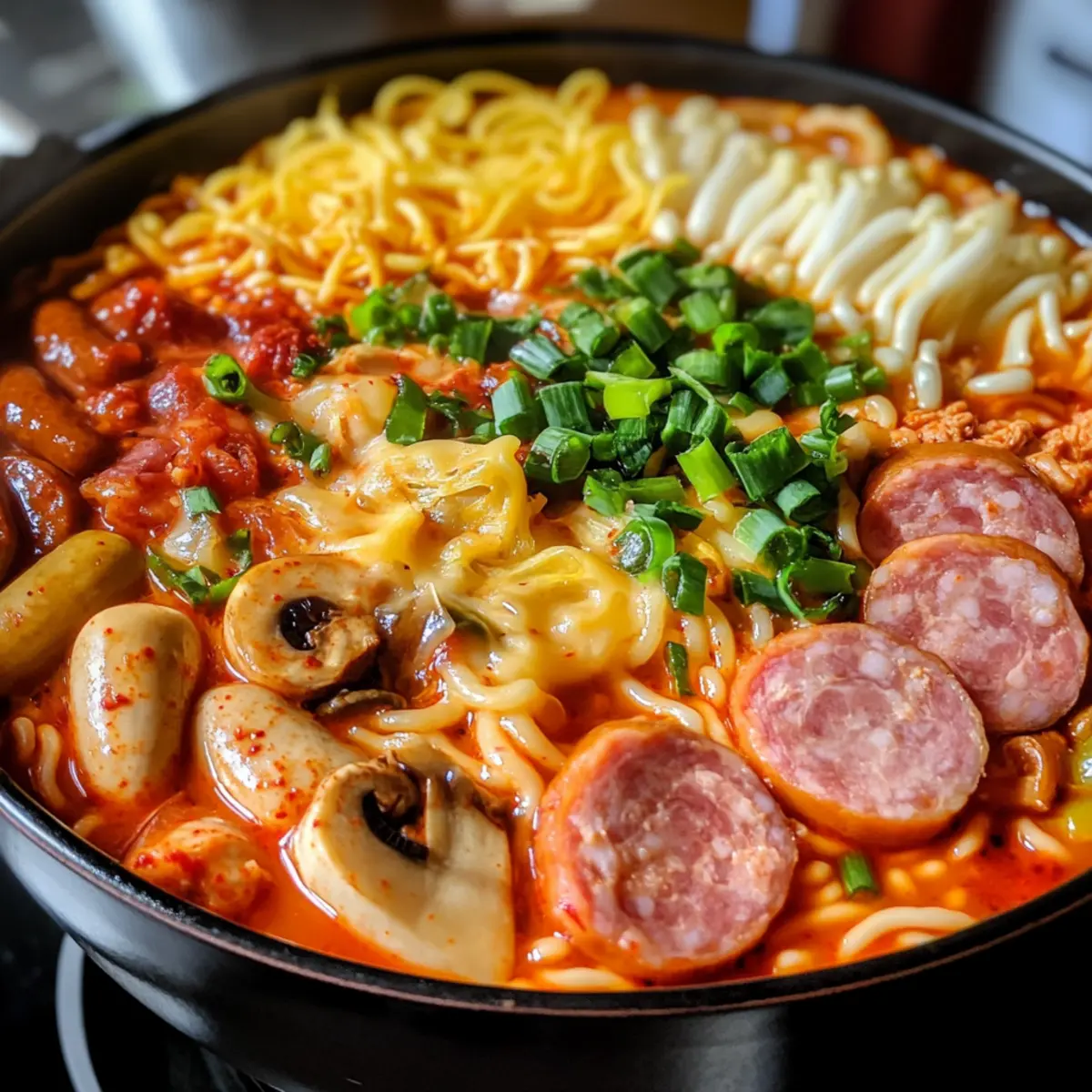
Savory One-Pot Korean Army Stew for Cozy Nights
Ingredients
Equipment
Method
- In a mixing bowl, combine the sauce ingredients to form a smooth paste.
- Layer the Spam, sausage, tofu, rice cakes, onion, mushrooms, and kimchi in a large pot.
- Pour the sauce mixture over the layers, then add broth to cover the ingredients. Bring to a boil.
- Once boiling, add the ramen noodles and cheese, stir, cover, and simmer for 3-4 minutes.
- Garnish with sliced green onions and serve hot, optionally with rice.